
Picture this: a warm afternoon, the sun shining brightly, and a cold, refreshing drink in hand. That drink is a homemade Coconut Brown Ale, a delightful fusion of rich malt flavors and the tropical essence of coconut that transports you straight to paradise.
This recipe is special because it beautifully balances the robust notes of brown ale with the sweet, creamy flavor of coconut. Not only is it an exciting brewing project, but it’s also a fantastic way to impress your friends at your next gathering.
Ready to dive into brewing this delicious beverage? Let’s gather our ingredients and get started!
Why You’ll Love This Recipe
This Coconut Brown Ale is a unique twist on a classic favorite. It’s perfect for beer enthusiasts and casual drinkers alike.
- Rich, malty flavor with a hint of coconut.
- Customizable for your taste preferences.
- Great for special occasions or quiet evenings.
- Easy to follow, even for beginner brewers.
My Experience Making This Recipe
Brewing my first batch of Coconut Brown Ale was an adventure. I remember the sweet aroma filling my kitchen as I toasted the coconut, and the anticipation of tasting my creation was thrilling.
When I finally took my first sip, I was blown away by the perfect balance of flavors. It was a hit at my last backyard party, with friends asking for the recipe!
Recipe Overview
- Recipe Name: Coconut Brown Ale
- Servings: About 48 ounces
- Prep Time: 30 minutes
- Cook Time: 1 hour
- Total Time: 1 hour 30 minutes
- Course: Beverage
- Cuisine: American
- Calories per Serving: Approximately 150
Equipment You Will Need
- Brew kettle
- Fermentation vessel
- Airlock
- Thermometer
- Hydrometer
- Sanitizing solution
- Bottling equipment
Ingredients for Coconut Brown Ale
- 6 lbs Light Liquid Malt Extract
- 1 lb Crystal Malt (60L)
- 1 lb Flaked Coconut (toasted)
- 1 oz Cascade hops (bittering)
- 1 oz Willamette hops (flavor)
- 1 packet Ale yeast (like Safale US-05)
- 3/4 cup Corn sugar (for bottling)
Ingredient Notes and Substitutions
- Light Liquid Malt Extract: This is the base of your beer, providing sweetness and body. You can substitute with dry malt extract if preferred.
- Crystal Malt: This adds color and sweetness. You can use other specialty malts for different flavors.
- Flaked Coconut: Toasting enhances the coconut flavor. Unsweetened shredded coconut can work as a substitute.
- Cascade hops: They add a floral aroma. You can use any bittering hops you prefer.
How to Make Coconut Brown Ale
Step 1: Gather Your Ingredients
Start by gathering all your ingredients and equipment. This helps ensure you have everything you need at hand.
Step 2: Heat the Water
Bring about 2.5 gallons of water to a boil in your brew kettle. This is the foundation for your brew, so make sure the water is clean and fresh.
Step 3: Steep the Crystal Malt
Once boiling, remove the kettle from heat and add the crystal malt in a steeping bag. Steep for about 20 minutes to extract flavors and color.
Step 4: Add the Malt Extract
Add the light liquid malt extract to the kettle while stirring. This step creates the sweet base for your ale, so ensure it’s fully dissolved.
Step 5: Bring to a Boil Again
Return the kettle to heat and bring the mixture back to a boil. Watch carefully to prevent boiling over, which is a common brewing mishap.
Step 6: Add Hops
Add the bittering hops (Cascade) once boiling. They will add bitterness to balance the sweetness of the malt.
Step 7: Toast the Coconut
While the brew is boiling, toast the flaked coconut in the oven until golden brown. This enhances the coconut flavor and adds a nice aroma.
Step 8: Fermentation
After boiling for 60 minutes, remove from heat and cool the wort quickly. Transfer to the fermentation vessel, add the toasted coconut, and pitch the yeast.
Step 9: Bottling
After fermentation (about 1-2 weeks), dissolve corn sugar in water and add to your beer for carbonation. Bottle the beer and cap securely.
Pro Tip: Always sanitize your equipment to avoid off-flavors in your beer.
Tips for the Best Coconut Brown Ale
- Use fresh ingredients for the best flavor.
- Monitor fermentation temperature for optimal yeast activity.
- Be patient; good beer takes time to mature.
- Experiment with different hops for unique flavor profiles.
- Keep notes on your brewing process for future reference.
Common Mistakes to Avoid
- Not sanitizing equipment can lead to infections.
- Skipping the cooling process can result in off-flavors.
- Over-carbonating by adding too much sugar before bottling.
- Rushing fermentation leads to poor flavor development.
Serving Suggestions
This Coconut Brown Ale pairs beautifully with a variety of dishes. Here are some delicious ideas:
- Spicy BBQ ribs
- Grilled chicken with tropical salsa
- Rich chocolate desserts
- Cheeseburgers topped with pineapple
Variations to Try
- Use different malts for a unique base flavor.
- Add vanilla beans for an extra layer of flavor.
- Incorporate other fruits like mango or pineapple.
- Experiment with different hop varieties for aroma.
Dietary Adaptations
- Gluten-free: Use gluten-free malt extracts and ensure all other ingredients are gluten-free.
- Dairy-free: Naturally dairy-free as no dairy products are used.
- Vegan/Vegetarian: This recipe is suitable for both diets.
- Low-carb/Keto: Consider using low-carb malt alternatives.
Storage and Reheating
Refrigerator
Store your bottled beer in a cool, dark place. This helps maintain its flavor and carbonation.
- Keep bottles upright to avoid sediment disturbance.
- Consume within a few months for the best taste.
Freezer
Freezing beer is not recommended as it can change the texture and flavor. Beer is best stored in the fridge for optimal enjoyment.
Reheating
Do not reheat beer; it is best served cold and fresh. Enjoy straight from the fridge for maximum refreshment.
Nutrition Information
| Nutrient | Amount |
|---|---|
| Calories | 150 |
| Total Fat | 0g |
| Saturated Fat | 0g |
| Carbohydrates | 12g |
| Fiber | 0g |
| Sugar | 0g |
| Protein | 1g |
| Sodium | 10mg |
| Cholesterol | 0mg |
This nutritional information is an estimate and can vary based on specific ingredients used.
Frequently Asked Questions
Can I substitute the malt extract?
Yes, you can use dry malt extract instead of liquid malt extract, but measure accordingly as they differ in concentration.
How long can I store homemade beer?
Homemade beer is best enjoyed within a few months for optimal flavor, but it can last up to a year if stored properly.
Why is my beer cloudy?
Cloudiness can be due to leftover yeast or proteins; ensure proper fermentation and bottling techniques to minimize this.
Can I brew this beer in smaller batches?
Absolutely! Just scale down the ingredients while maintaining the same ratios.
Can I use fresh coconut?
Yes, but ensure to toast it properly to enhance the flavor and reduce moisture content.
Final Thoughts
Brewing your own Coconut Brown Ale is a rewarding experience that brings a taste of the tropics right to your glass. With its unique flavor profile, this beer is sure to become a favorite.
So why not give it a try? You might just find your new go-to recipe for gatherings or quiet nights in.
For more delicious drinks, check out this Coconut Margarita Recipe or try this refreshing Coconut Coffee Recipe!
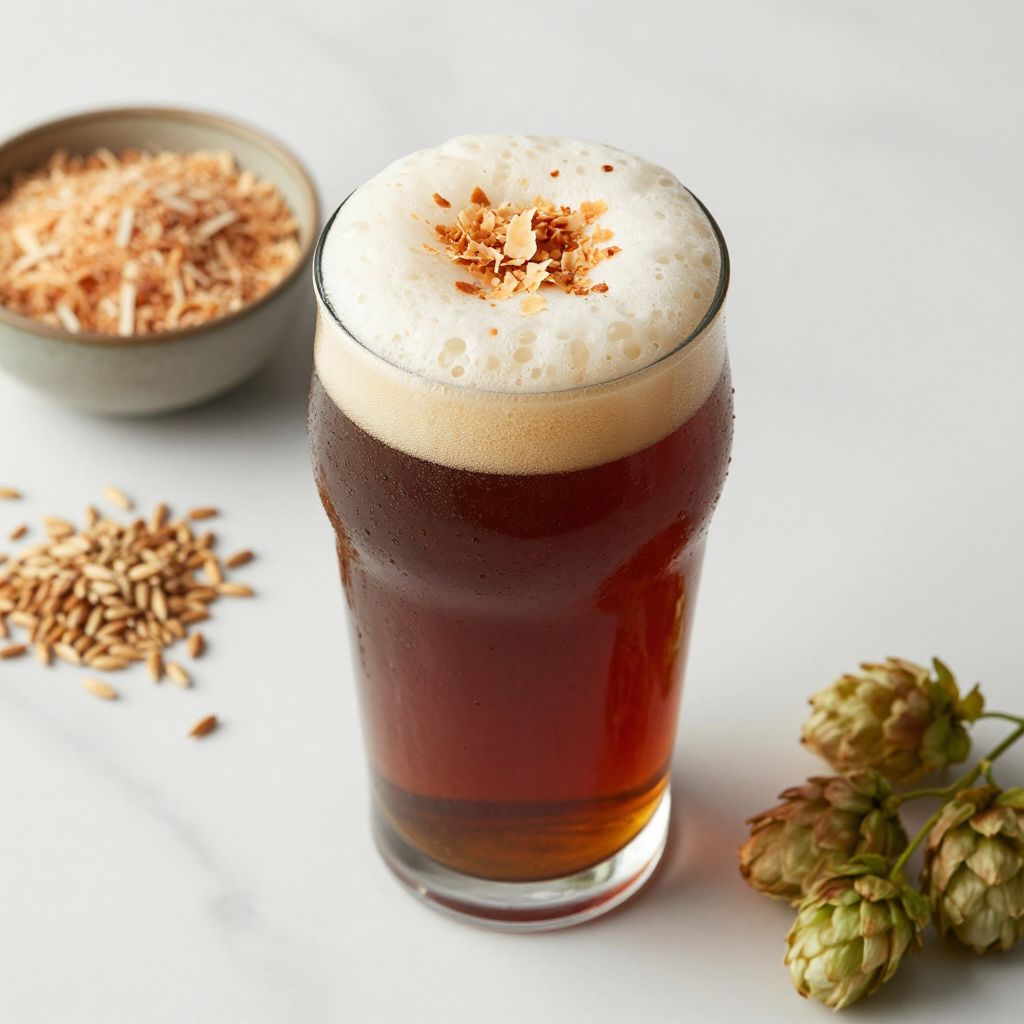
Coconut Brown Ale
Ingredients
Equipment
Method
- Start by gathering all your ingredients and equipment.
- Bring about 2.5 gallons of water to a boil in your brew kettle.
- Once boiling, remove the kettle from heat and add the crystal malt in a steeping bag. Steep for about 20 minutes.
- Add the light liquid malt extract to the kettle while stirring until fully dissolved.
- Return the kettle to heat and bring the mixture back to a boil.
- Add the bittering hops (Cascade) once boiling.
- While the brew is boiling, toast the flaked coconut in the oven until golden brown.
- After boiling for 60 minutes, remove from heat and cool the wort quickly.
- Transfer to the fermentation vessel, add the toasted coconut, and pitch the yeast.
- After fermentation (about 1-2 weeks), dissolve corn sugar in water and add to your beer for carbonation. Bottle the beer and cap securely.